Variations
What prints with the starting settings
| Paper | US Letter — 215.9 × 279.4 mm (8.5 × 11 in) |
|---|---|
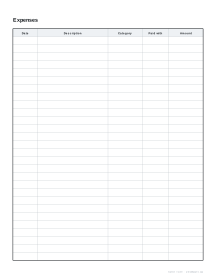
| Columns | Date, Description, Category, Paid with, Amount |
| Rows on this page | 28 |
| Margins | 1/2″ |
| Line weight | 0.18 mm (bold 0.35 mm) |
| Print setting | Scale 100% / Actual size |
Write it down as you spend
Tracking every purchase for a month is the quickest way to find out where money actually goes. It doesn’t need an app or a bank connection, just a sheet you can keep in a wallet, a planner or on the fridge, and the habit of writing each purchase down the same day.
Using categories
Pick a short list of categories before you start, such as groceries, eating out, transport, home, health, fun and gifts, and use the same words every time. At the end of the month, add up each category and copy the totals onto your monthly budget sheet.
Good uses
- A no-spend month: log every exception and why it happened.
- Holiday spending: one sheet per trip, with the currency in the description.
- Shared costs: split housemate or family expenses by writing initials in the paid-with column.
- Small business petty cash: a simple paper trail alongside the receipts.
Printing
Print at 100% / Actual size. Fold a sheet in half to carry it, or punch it for a ring binder. Several pages printed together make a month’s spending log.
More logs & budgets sheets
Frequently asked questions
What are the columns?
Date, Description, Category, Paid with and Amount. The description column is the widest, for the shop or item.
How many entries fit on a page?
28 on Letter and 31 on A4 with 8 mm rows; about 32 on Letter with the compact 7 mm rows.
Why record how I paid?
It makes reconciling easier: you can tick off card payments against your statement and count cash spending separately.
Can I use it for business expenses?
Yes, for simple records such as mileage, supplies or petty cash. Keep the receipts with the sheet; for tax purposes, the receipts are what count.
Last updated · About us