What prints with the starting settings
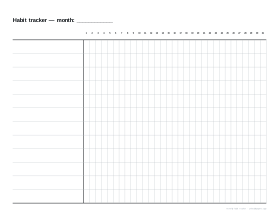
| Paper | US Letter — 279.4 × 215.9 mm (11 × 8.5 in), landscape |
|---|---|
| Days | 31 (undated) |
| Habit rows | 12 |
| Margins | 1/2″ |
| Line weight | 0.18 mm (bold 0.35 mm) |
| Print setting | Scale 100% / Actual size |
Why track habits on paper
A habit tracker is a grid: habits down the side, days across the top. Each day you keep a habit, you fill in a square. The appeal is simple feedback. After a week you can see which habits are sticking, and an unbroken row of filled squares is a surprisingly strong reason not to skip tomorrow.
Options
Habits. Type them in to print them neatly, or leave the rows blank.
Rows. From 4 to 20; extra rows stay empty for habits you add later.
Month. Choose a month and year for exact days and weekday initials, or leave it undated with 31 columns to reuse for any month.
Ideas for habits
- Health: drink water, walk 8,000 steps, stretch, sleep by 11.
- Learning: read 20 pages, practise an instrument, a language lesson.
- Home: make the bed, tidy for ten minutes, plan tomorrow.
- Money: no-spend day, log expenses (see the budget log).
Sticking with it
- Start with three to five habits you care about; a long list is easier to abandon than a short one.
- Make each habit specific: “Read 10 pages” is easier to tick than “Read more”.
- Attach a new habit to an existing routine, such as stretching while the kettle boils.
- Keep the sheet where you look every day, and fill it in at the same time each evening.
- Missing one day is normal; missing two is the start of a new pattern, so get back on the next day.
- At the end of the month, count each row and decide what to keep, change or drop.
Printing tips
Print at 100% / Actual size. Light grey gridlines keep the filled squares readable; choose a darker line colour in the advanced options if you prefer bolder squares.
Frequently asked questions
How many habits can I track?
Up to 20 rows. Most people find six to ten habits manageable; more rows simply give you spare space.
Can I print my habits on the sheet?
Yes. Type one habit per line in the habits box and they are printed in the first rows. Leave it empty to write them by hand.
What does choosing a month change?
The tracker gets exactly the right number of days for that month, the month name in the title, and the first letter of each weekday under the date, so weekends are easy to spot.
Is it a daily or a monthly tracker?
Both: each sheet covers a month, with one box per habit for every day, so you tick it daily and review it monthly.
Landscape or portrait?
Landscape gives each day a wider square and fits long habit names; portrait fits better in a binder. Both work on Letter and A4.
Can I use it for a bullet journal?
Yes. Print on A5 or Half Letter, or on Traveler's notebook size, and trim to fit your journal.
Is there a yearly habit tracker?
Print the tracker for each month of the year by changing the month, or use the yearly calendar to colour in good days.
Last updated · About us