Variations
What prints with the starting settings
| Paper | US Letter — 215.9 × 279.4 mm (8.5 × 11 in) |
|---|---|
| Rows on this page | 38 |
| Amount columns | 3, split for cents |
| Margins | 1/2″ |
| Line weight | 0.18 mm (bold 0.35 mm) |
| Print setting | Scale 100% / Actual size |
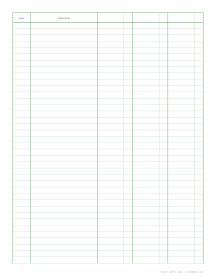
Ledger paper, the classic way
Before spreadsheets, accounts were kept on columnar paper: a narrow date column, a wide space for the description, and ruled money columns where the digits line up under each other. The split amount columns keep cents or pence separate, so totals add up neatly down the page.
Setting up a cash book
- Write the account name and month at the top.
- Use the first row for the opening balance.
- Record each transaction on its own line: date, description, amount in or out.
- Keep a running balance in the third column and rule off at the end of the month.
Who uses it
- Club treasurers recording subscriptions and expenses.
- Small businesses keeping a petty cash book.
- Students learning journal entries and trial balances.
- Households keeping an account register for a bank account.
For simple spending plans, the monthly budget sheet is quicker; for many-column analysis, try the 12-column sheet.
Printing
Print at 100% / Actual size on Letter or A4. Light green or buff paper gives the traditional ledger look.
More columnar & ledger sheets
Frequently asked questions
What columns are on the sheet?
A date column, a wide description column, and three amount columns each split into a wide part for whole units and a narrow part for cents or pence.
How many rows are there?
38 rows on Letter with 1/4 inch rows. Choose a taller row height in the generator for more writing space.
How would I use three amount columns?
A common set-up is Debit, Credit and Balance, so each line shows the transaction and the running total. Another is In, Out and Category total.
Is paper bookkeeping still useful?
For small clubs, petty cash, household accounts and learning double-entry, yes. Writing each entry by hand makes errors easier to spot and the logic easier to follow.
Last updated · About us