Variations
What prints with the starting settings
| Paper | US Letter — 215.9 × 279.4 mm (8.5 × 11 in) |
|---|---|
| Agenda | 5 typed items |
| Attendees | 2 names |
| Actions | 5 rows (fewer on small paper): action, owner, due, done |
| Decisions box | No |
| Margins | 1/2″ |
| Line weight | 0.18 mm (bold 0.35 mm) |
| Print setting | Scale 100% / Actual size |
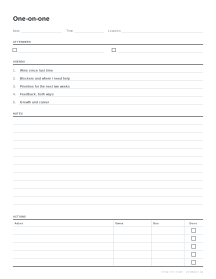
The same five questions, every time
One-on-ones drift when they have no shape. A standing agenda keeps them useful: the same five topics each time, so nothing important waits a month to come up. The person being managed can jot notes against each item before the meeting starts.
How to run it
- Start with wins. It sets a constructive tone and records progress worth mentioning at review time.
- Spend most of the time on blockers and priorities, where the manager can actually help.
- Make feedback two-way, and write down what each of you will try.
- Finish with the action table: one owner and one date per action.
Keeping a record
Keep each sheet in a folder, newest on top. Before the next one-on-one, read the last page’s actions first: the start of every meeting is the end of the previous one. Over a few months the stack becomes a fair record of progress for appraisals.
Printing tips
Print at 100% on Letter or A4. For formal committee meetings, use the meeting minutes template instead.
More meeting notes sheets
Frequently asked questions
What should a one-on-one cover?
This template uses five standing topics: recent wins, blockers, priorities for the next couple of weeks, feedback in both directions, and growth. Change them in the Agenda items box to fit your team.
Who owns the agenda?
Many managers let the employee lead, adding their own topics first. Print the sheet before the meeting and let them write on the blank lines.
How often should one-on-ones happen?
Weekly or every two weeks is common. Whatever the rhythm, keeping the sheets in order shows how actions and topics change over time.
Why is there only one attendee row?
A one-on-one has two people, so one row with two names is enough. Raise Attendee rows if a third person joins.
Last updated · About us